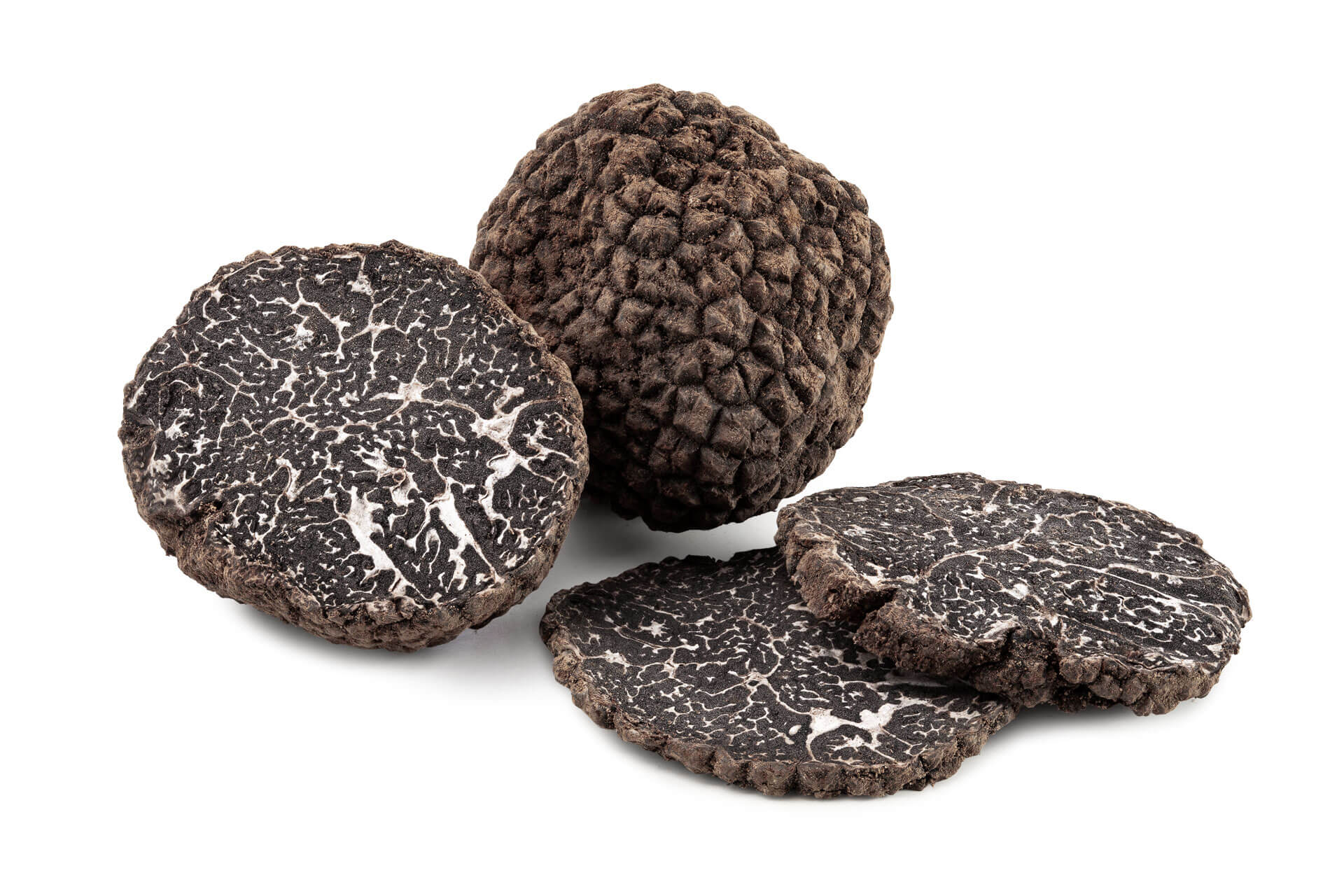
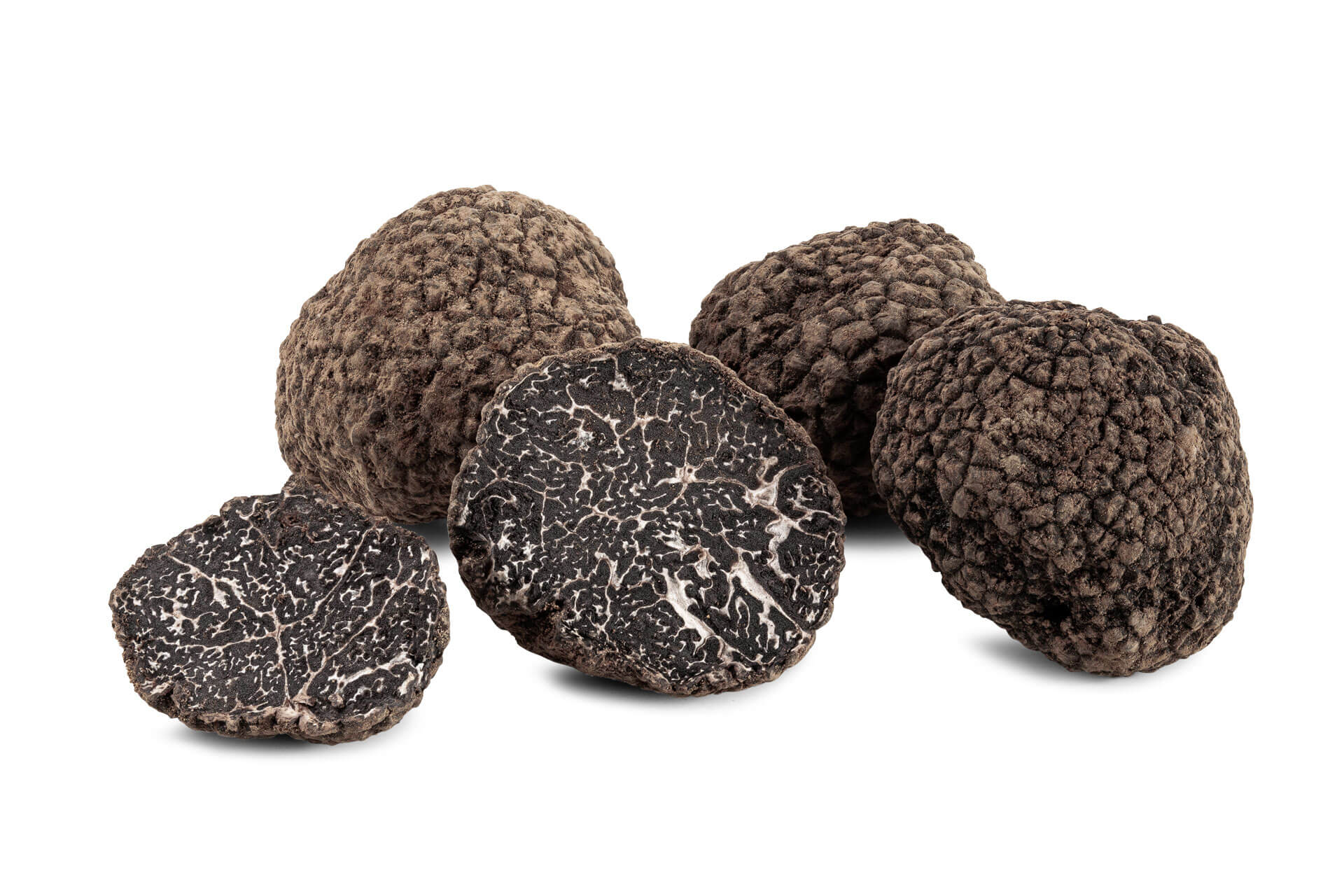
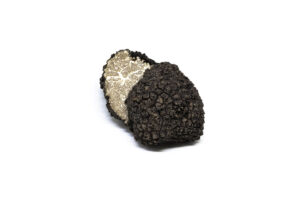
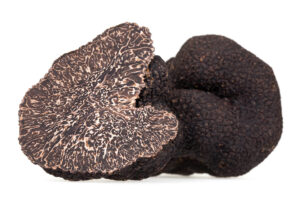
Tuber melanosporum, Class B, also known as the Périgord Truffle or the “Black Diamond” among connoisseurs. Class B quality, weighing between 5 and 19 grams; the truffle may have cracks or scratches.
Recommended storage conditions: In a sealed container, in a refrigerator at +2°C to +4°C.
Recommended storage period: 5 to 15 days.
Key characteristics:
- Appearance:
- The outer part (peridium) is black to dark brown, with irregular, pyramidal warts.
- The interior (flesh) is dark brown to black, marbled with thin, white veins that create a complex and distinctive structure.
- Size: It usually ranges from 3 to 9 cm in diameter, but can reach up to 1 kg under ideal conditions.
- Aroma and taste: The black truffle has an intense, earthy, and musky aroma with notes of cocoa, hazelnuts, and forest soil. Its flavor is rich, complex, and slightly spicy.
Habitat and Harvesting:
- The black truffle grows in symbiosis with the roots of trees such as oak, hazel, and beech. It prefers limestone soils and a temperate climate.
- It is found primarily in France, Italy, Spain, and parts of Eastern Europe.
- The harvesting season runs from November to March. Harvesting requires trained dogs (or, less commonly, pigs) that can detect its distinctive aroma underground.
Culinary uses:
- The black truffle is widely used in haute cuisine.
- It can be used raw, grated over pasta, risotto, eggs, or salads, but it also retains its aroma when cooked.
- It is often added to sauces, creams, butter, and cheeses to enrich the flavor of the dish.
Distinctive feature:
The black truffle is also called the “black diamond” because of its high value and incomparable taste. It is more affordable than the white truffle Tuber Magnatum, but it is also a symbol of luxury and quality in gourmet cuisine.

Reviews
There are no reviews yet.