
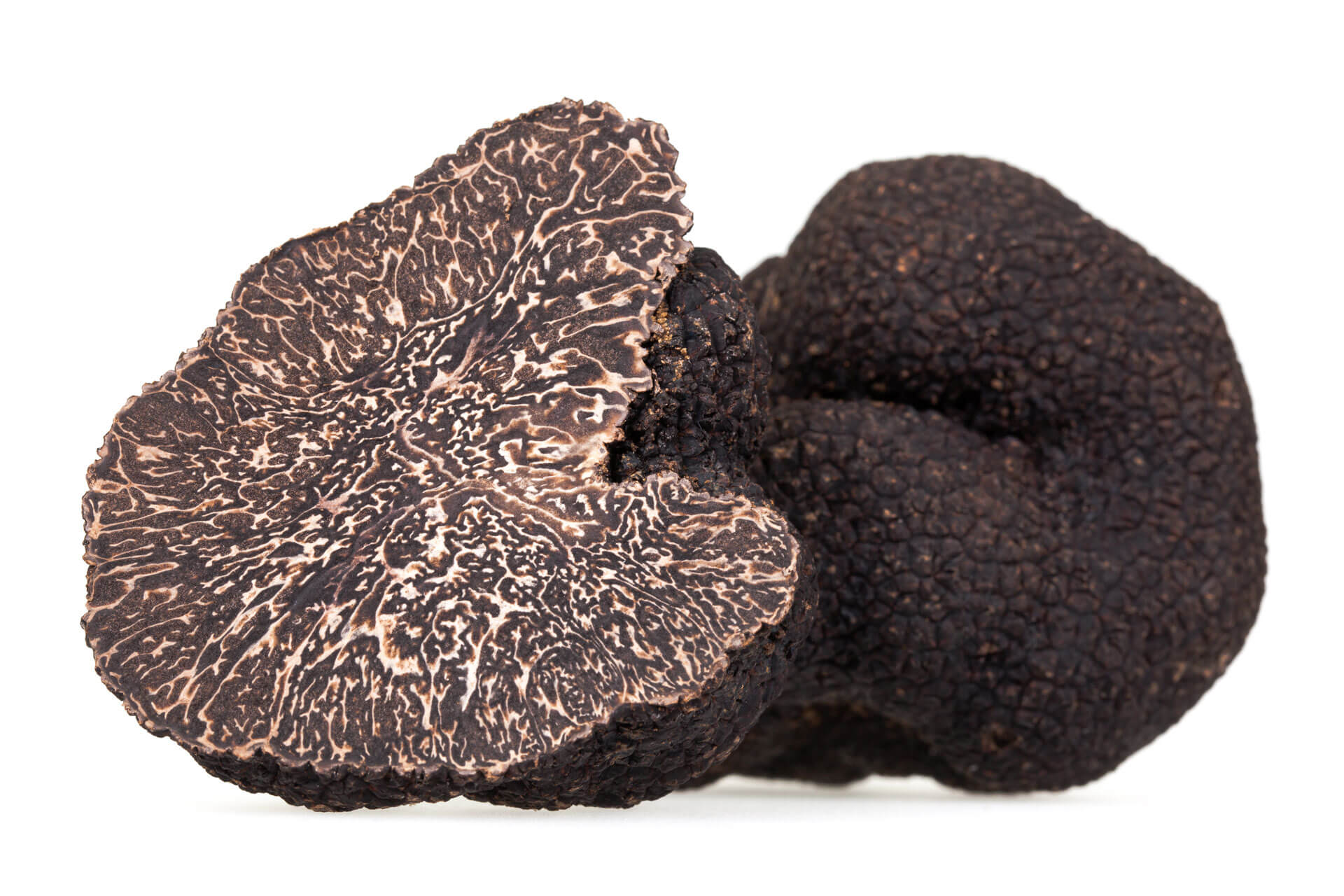
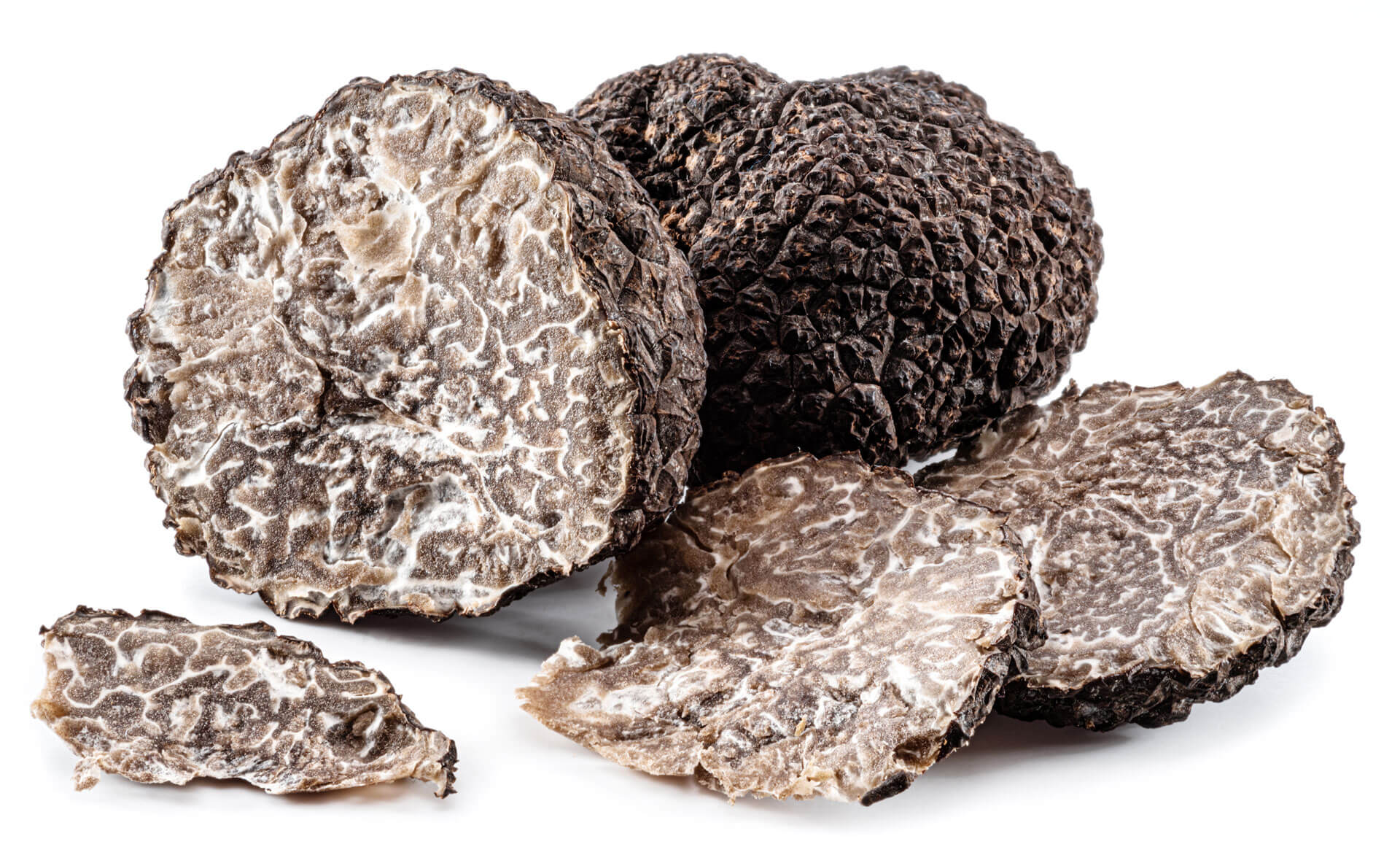
Grade B from Tuber Brumale vitt., also known as the black winter truffle or muscat truffle, consists of truffles weighing between 1 and 7 grams; the package may contain damaged or bruised truffles, as well as pieces.
Recommended storage conditions: In a sealed container, in a refrigerator at +2°C to +4°C.
Recommended storage period: 5 to 15 days.
Key characteristics:
- Appearance:
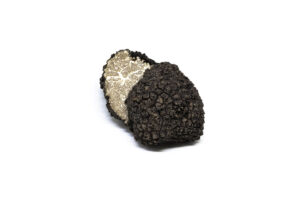
- The outer part (peridium) is black with small, irregular pyramidal warts.
- The inner part (globe) is dark gray to black-brown with clearly defined white veins forming a complex network.
- Size: It usually reaches 2 to 7 cm in diameter.
- Aroma and taste: The winter truffle has an intense, musky aroma with notes of spices and damp soil. Its flavor is strong, slightly spicy, and earthy.
Habitat and Harvesting:
- The winter truffle grows underground in symbiosis with trees such as oak, beech, hazel, and linden.
- It is found primarily in regions with limestone soils and a temperate climate.
- The harvesting season is usually from November to March, with the highest quality achieved in the middle of winter.
Culinary uses:
- The winter truffle is highly prized in the kitchen for its unique aroma and its ability to add depth of flavor to dishes.
- It is used grated over pasta, risotto, meat, or eggs. It is often added to truffle oils and sauces.
- Unlike some other truffles, the winter truffle is better suited for dishes that require a more intense flavor.
Distinctive feature:
The winter truffle is often compared to the black truffle Tuber Melanosporum, but it has a sharper aroma and a lower price, making it a more affordable choice for gourmet cuisine. It is particularly favored for dishes served during the winter months.

Reviews
There are no reviews yet.